In this LG vs Daikin AC comparison you’ll learn how each brand differs in energy efficiency, cooling performance, air quality, smart features and durability. I’ll also tell you which AC suits your needs best so you can make the right choice.
LG vs Daikin 1.5 Ton 5 Star AC
LG and Daikin have both good 1.5 ton 5 star inverter models but Daikin does win this battle by a far margin.
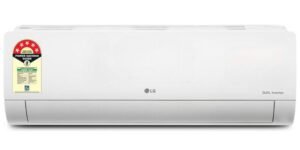
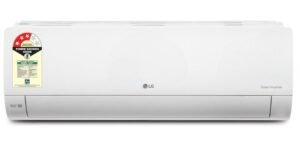
The product offered by LG is the US-Q19YNZE3, which is a dual inverter split AC with the AI convertible 6-in-1 cooling and VIRAAT mode to increase capacity. It is a versatile unit with intelligent connectivity and an amazing voltage operating range.
Best Overall – Daikin 1.5 ton 5 Star AC
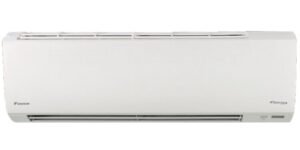
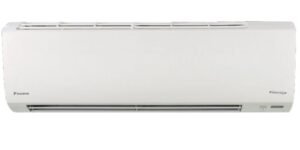
The Daikin 1.5 Ton 5 Star Inverter Split AC is an outstanding air conditioner, and it is a level up of their earlier split AC lines. It was able to cope with our performance tests with ease, it was overall usable and there were numerous advanced features to select.
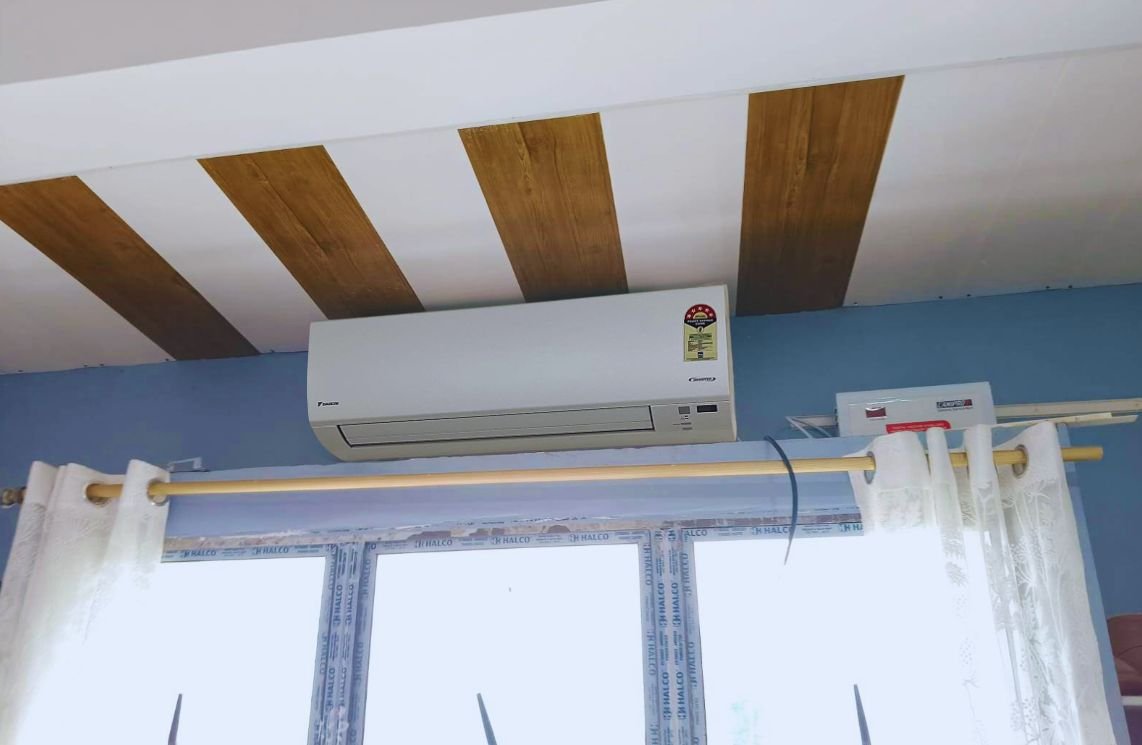
What’s To Like
- Excellent cooling performance: In our cooling tests, Daikin 1.5 Ton 5 Star performed very well. It provided 5.28 kW of cooling capacity and a high 5.2 ISEER rating at different room sizes and ambient conditions. The Daikin 1.5 Ton 5 Star will cover you no matter what the layout of the room is or what the temperature is outside.
- Handles hot weather with ease: Daikin 1.5 Ton 5 Star will be a good choice to those who live in areas with hot summer or severe changes in temperatures. The Patented Swing Compressor itself is capable of operating in high ambient temperatures of up to 54 °C without efficiency loss. However, in case you worry about the voltage variations, you may trust the inbuilt Stabilizer Inside feature that controls the voltage within a large range of 130 V to 285 V.
- Full-fledged unit: The Daikin 1.5 ton 5 star is loaded with lots of smart features and technologies. These characteristics make the process of cooling more flexible, allowing you to cool where and how you want to provide you with more comfort. Coanda Airflow and 3D Airflow to Dew Clean Technology and Patented Streamer Discharge, this AC is all cooling, hygiene, and energy saving.
What’s Not So Good
- Pricey. It is one of the most costly split air conditioners that Daikin has in the 1.5 ton segment. However, it remains a good deal, particularly when you can get it on a sale. The compressor warranty of 10 years and 5 Star energy rating contribute to the offset of the initial cost in the long run.
Other Daikin 1.5 Ton 5 Star ACs
The Daikin 1.5 Ton 5 Star line has a couple of split versions. They are great air conditioners by themselves and have a slightly varied feature set at a more affordable cost.
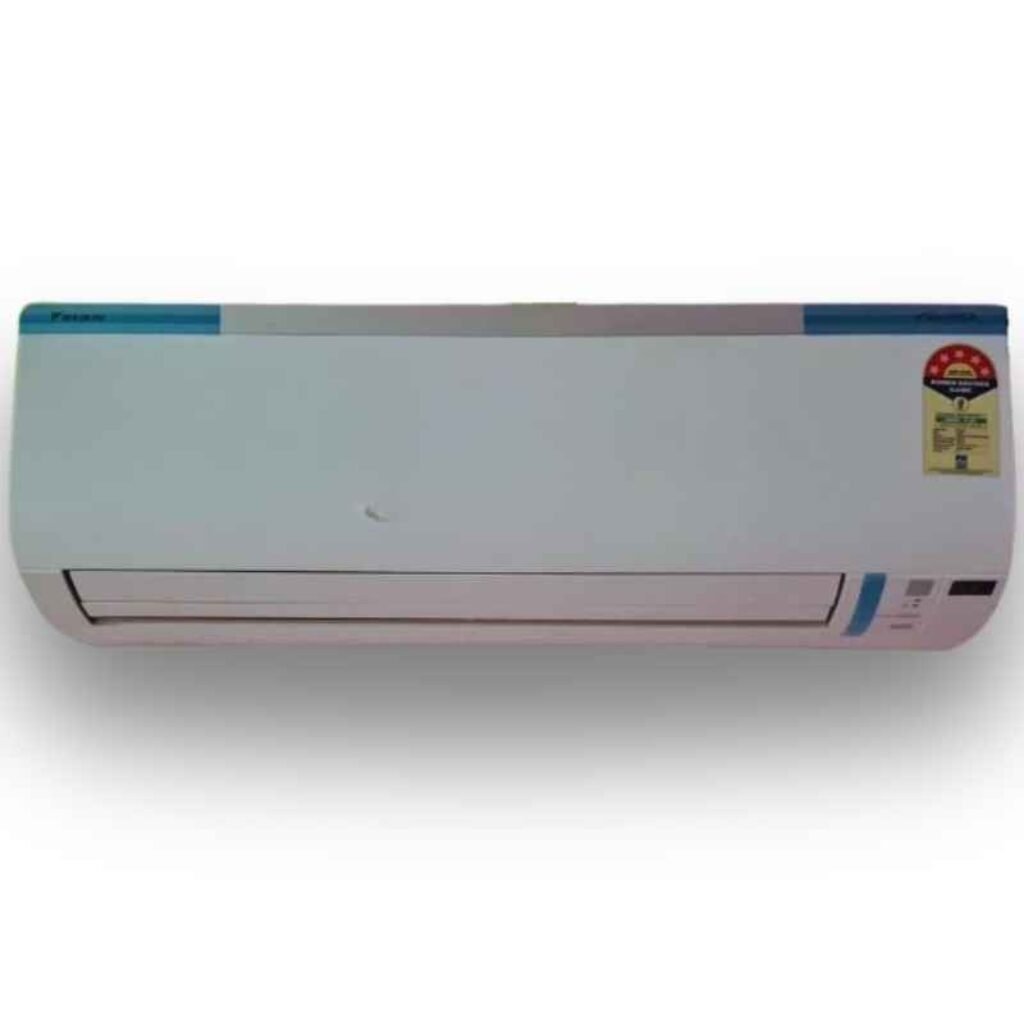
Best LG – 1.5 Ton 5 Star AC (US-Q19YNZE3) Dual Inverter Split AC
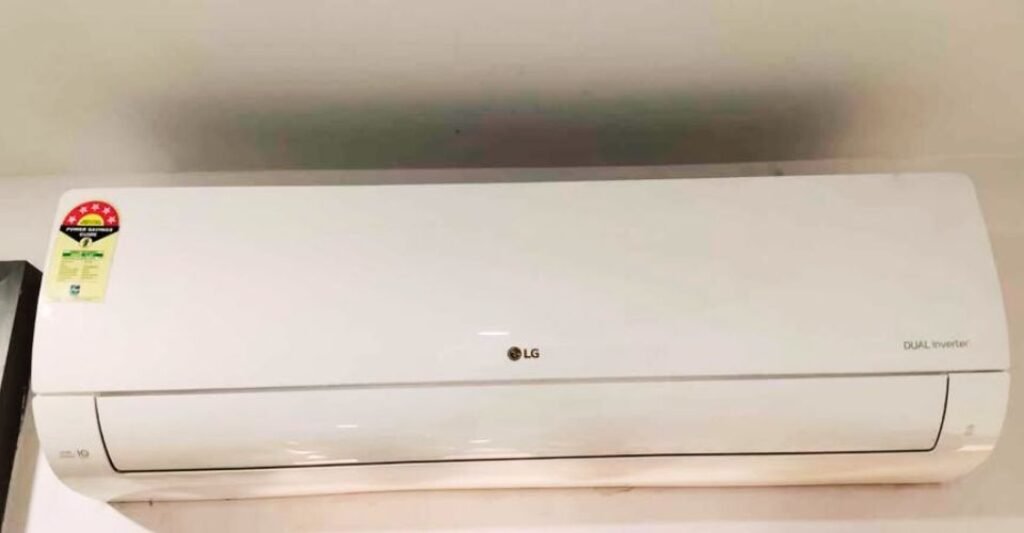
Already, LG 1.5 Ton 5 Star Dual Inverter Split AC is a great option of a mid-range split air conditioner with its great energy efficiency and cooling capacity.
Nevertheless, its performance in extreme heat really stood out among the rest, being able to sustain maximum cooling performance at an ambient temperature of 55 °C when in operation. This capability can hardly be claimed by other ACs in this price range.
What’s To Like
- AI Convertible 6-in-1 cooling: This AC can be changed to six capacity modes that make it more versatile and more energy-efficient. It can reduce to 40 percent capacity when there are few people in the room and nothing is going on, or increase to 116 percent capacity in VIRAAT Mode when the heat is unbearable. You just use the power you really require.
- Excellent energy efficiency: At the lowest capacity setting with Diet Mode+ on, you use as little as 252W of power that is less than most competing 1.5-ton models we have ever seen. Also, there is the A+ Deep Learning AI+ Convertible mode, which automatically changes the cooling capacity according to the real-time conditions and the learned usage patterns.
- Excellent humidity and excessive heat control: The specifications demonstrated the degree to which LG was able to cope with any type of adverse weather. Monsoon Comfort Technology used up to 30.8% less energy in humid weather than the traditional dehumidification and VIRAAT Mode increased cooling capacity up to 116% in blazing heat. Ideal climate performance in every aspect.
What’s Not So Good
- Outdoor unit is a little heavier: The outdoor unit is a little heavier than the other 1.5-ton split ACs we have tested, at 28.4 kg. It will not be a big issue in most instances, but when you have a wall-mounted bracket that has less weight bearing capacity or a problematic place to install, well, you should check structural support before you leap.
indoor UnitCopper Coil

LG Vs. Daikin AC 1.5 Ton 3 Star
In the market of 1.5 Ton 3 Star inverter split AC, LG has the field rather well covered but does not mean that Daikin is out of the market. The similar split AC offered by Daikin, the Daikin ATKL50UV16VAF, is a feature-packed, energy-efficient model that can still be considered.
We shall enter into the details below.
indoor UnitCopper Coil
The Main Difference
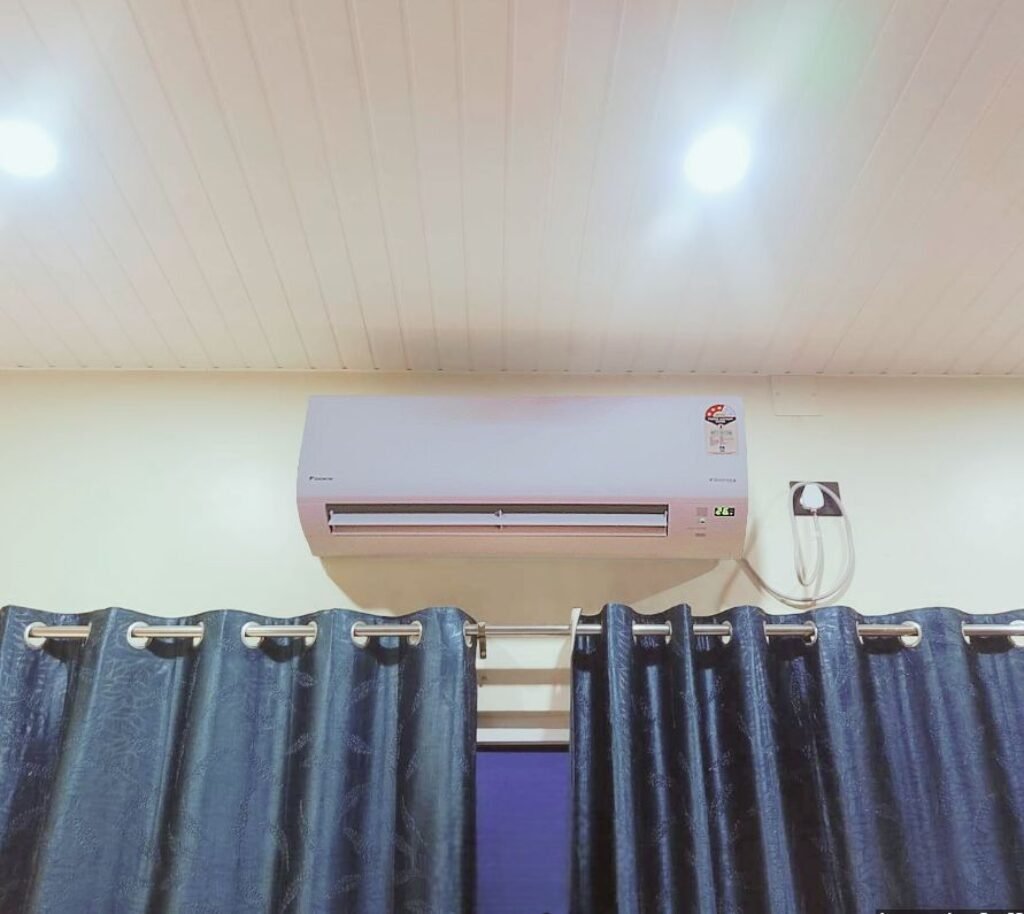
Daikin ATKL50UV16VAF is a 1.5 Ton swing inverter split AC that also operates effectively in extreme heat up to 52 °C. It has a rated cooling capacity of 5.0 kW and Patented Swing Compressor that operates quietly and friction free. Daikin is equipped with Coanda Airflow, Dew Clean Technology, Patented Streamer Discharge, and Hepta Sense (7 sensors). And the DNNS Self-Heal anti-corrosion coating is said to increase the life of the indoor unit.
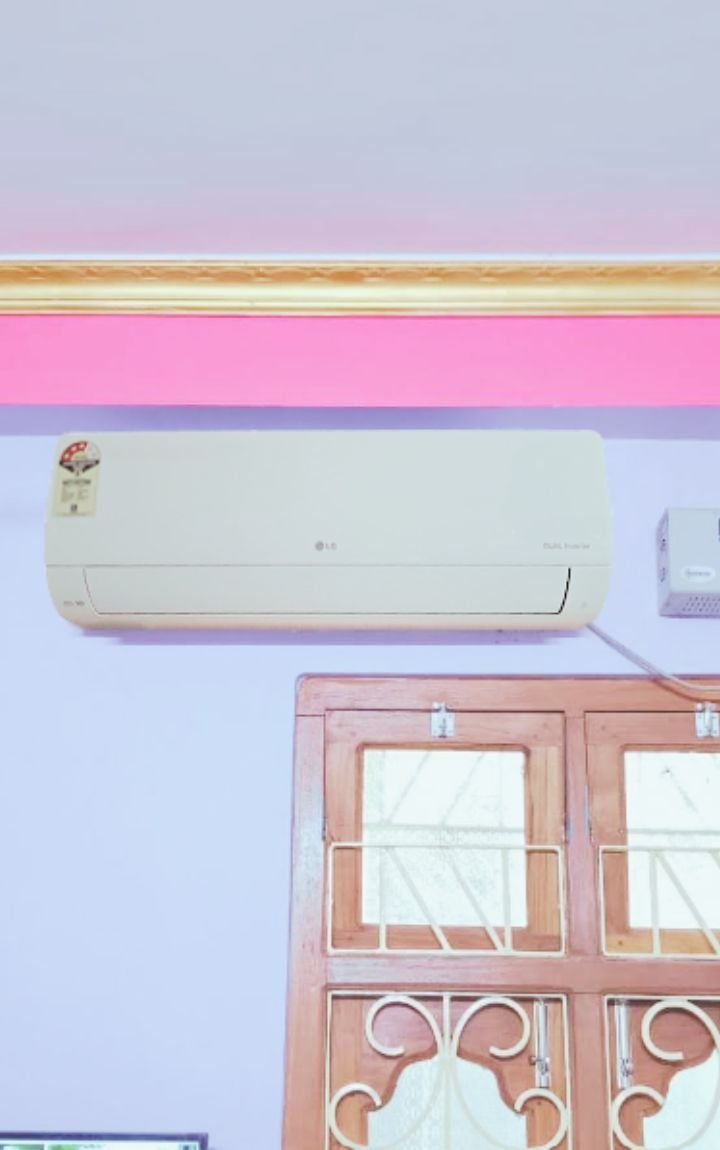
LG AS-Q18JNXE– 1.5 Ton smart inverter split AC with AI Convertible 6-in-1 cooling, which allows it to adjust capacity, temperature, and fan speed automatically. It has six convertible modes between 40% and 124% (VIRAAT Mode) and has an HD filter with Anti-Virus Protection, ADC Safety Sensor, Diet Mode+ and HimClean (auto-cleaning). It also includes Ocean Black Protection on the copper condenser although, in terms of raw cooling capacity, it is a bit lower than the Daikin.
LG vs. Daikin AC 1 Ton
Need the most suitable 1-Ton split AC in your house? This head to head analysis will be comparing LG to Daikin in the 1 Ton inverter segment.
At AirConditionerInsights.in, we strongly believe that the most effective method of determining the performance of an air conditioner in actual real-life situations is to compare the specs, features, and technology.
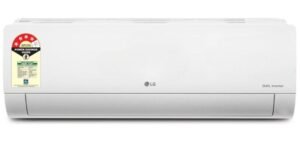
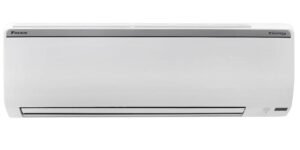
In this comparison, we have compared LG 1 Ton 4 Star DUAL Inverter Split AC (AS-Q13JNYE) and Daikin 1 Ton 5 Star Inverter Split AC (FTKM35U). Let’s see how they compare.
indoor UnitCopper Coil
The Main Difference
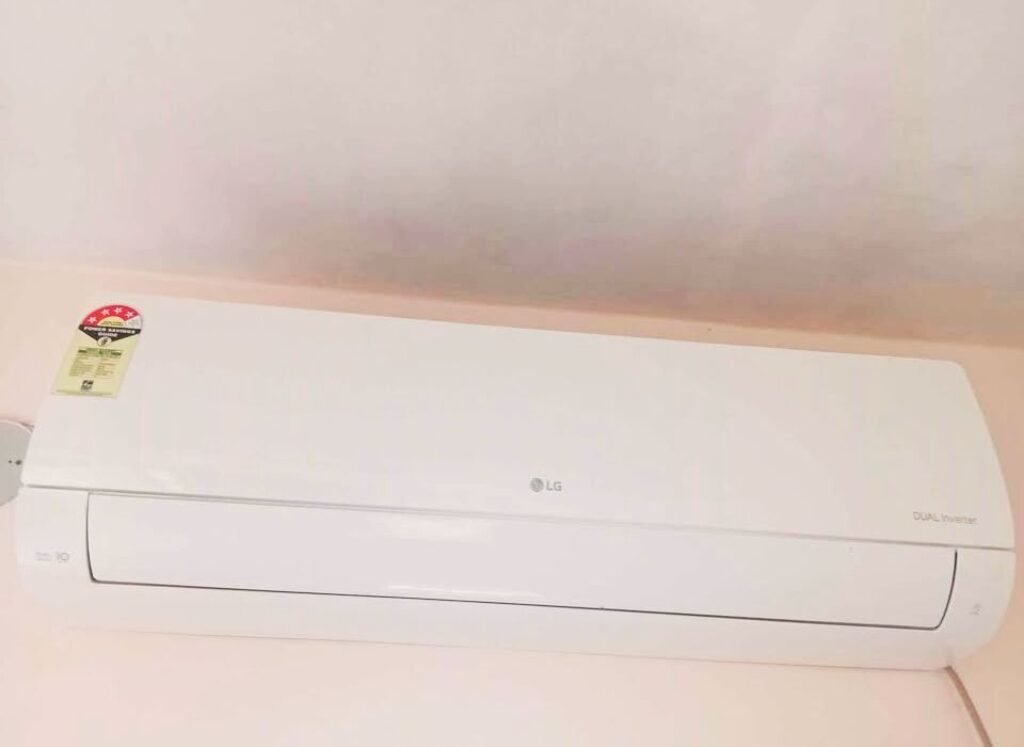
LG 1 Ton 4 Star DUAL Inverter has a slightly lower annual energy consumption (515.84 kWh vs. 523.54 kWh) and a slightly higher ISEER value (5.25 vs. 5.20), which indicates that it outperforms on energy efficiency even though it is labelled as 4-star. The LG unit is also significantly lighter on the inside and the outside (8.1 kg + 24.5 kg vs. 9.5 kg + 28 kg). It is already equipped with intelligent capabilities such as AI Convertible 6-in-1 cooling, VIRAAT Mode that cools faster, HD Philtre with Anti-Virus Protection and an expanded stabiliser-free voltage range (120 V-290 V). It is also one of the quieter units in the segment with the lower indoor noise floor of 22 dB(A). With that said, the 4-star BEE label can be significant to the customers who are concerned with official energy ratings on paper.
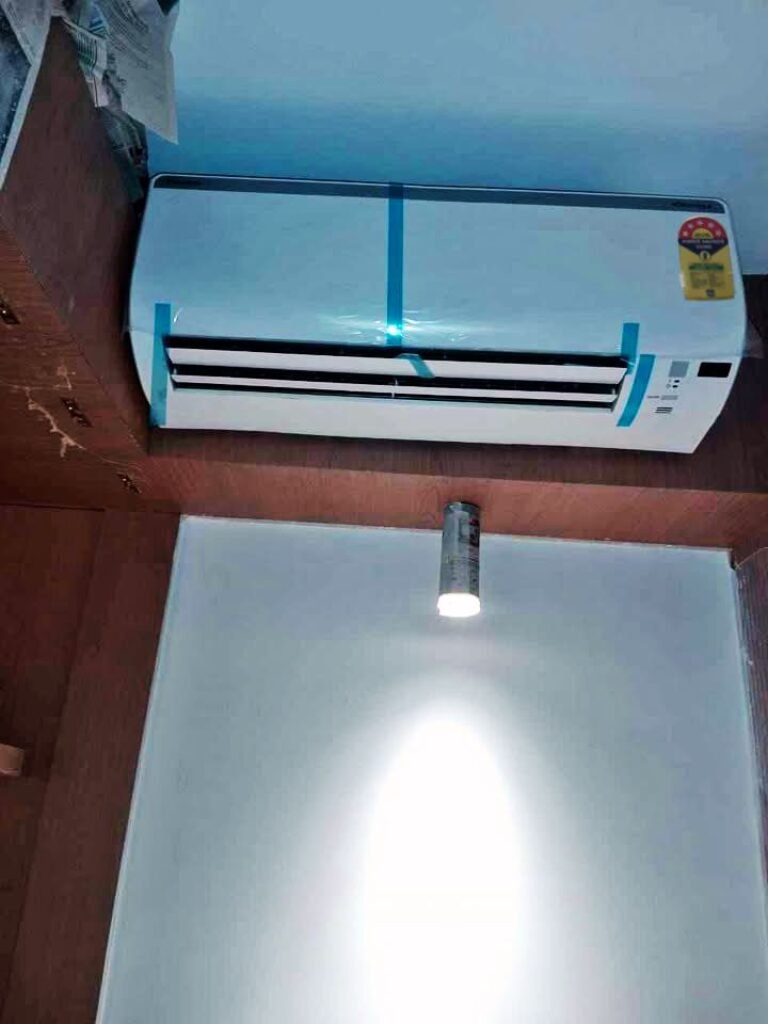
The Daikin 1 Ton 5 Star Inverter has a better BEE star rating (5 Star vs. 4 Star) and this is usually the initial thing that the buyer notices on the energy label. It has slightly higher rated cooling capacity (3,520 W against 3,500 W) and can work in ambient temperature up to 54 °C. Daikin also differentiates with its own proprietary Dew Clean Technology, which purifies the indoor coil at a button press, and a Triple Display feature that displays real-time power consumption percentage, set/room temperature and error codes. The DNNS Self-Heal anti-corrosive coating on the inside unit provides durability. It also throws its air up to 16 metres (52 feet) which makes it a good option in longer rooms. The unit is however heavier, a little noisier at the lowest fan speed (27 dB(A) vs. 22 dB(A)) and its stabiliser-free voltage range (130 V285 V) is smaller than that of the LG.
LG vs. Daikin AC 2 Ton
You can read below to find out the details of each model and compare them whether you are more energy-saving or smart versatile.
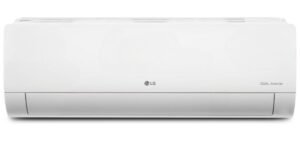
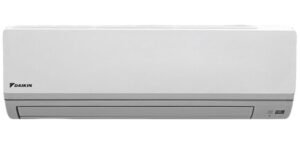
indoor UnitCopper Coil
LG 2 Ton 3 Star DUAL Inverter Split AC.
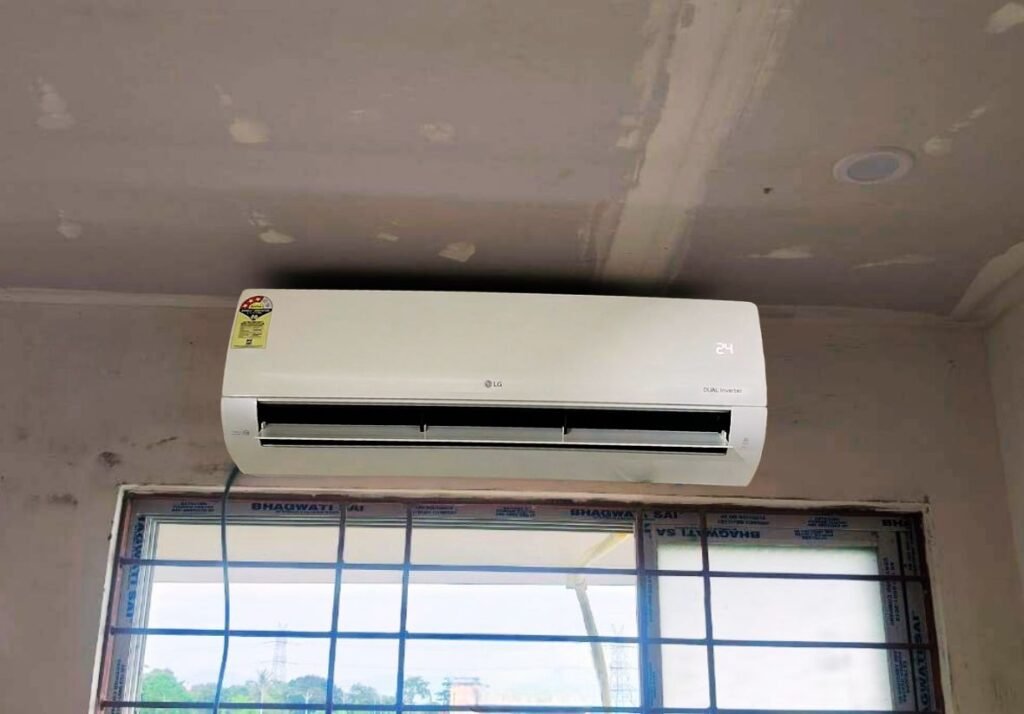
It can work in ambient temperatures up to 55 °C and can work stabiliser-free in the 120 V to 290 V voltage range. The HD Philtre that has Anti-Virus Protection assists in capturing airborne particles, and Ocean Black Protection with Gold Fin+ helps in protecting the condenser against rust and corrosion. The noise level is also impressive at 31 dB in the indoor unit, and the Smart Diagnosis System assists in troubleshooting the problems in a short period of time.
Daikin 2.2 Ton 4 star inverter split AC.
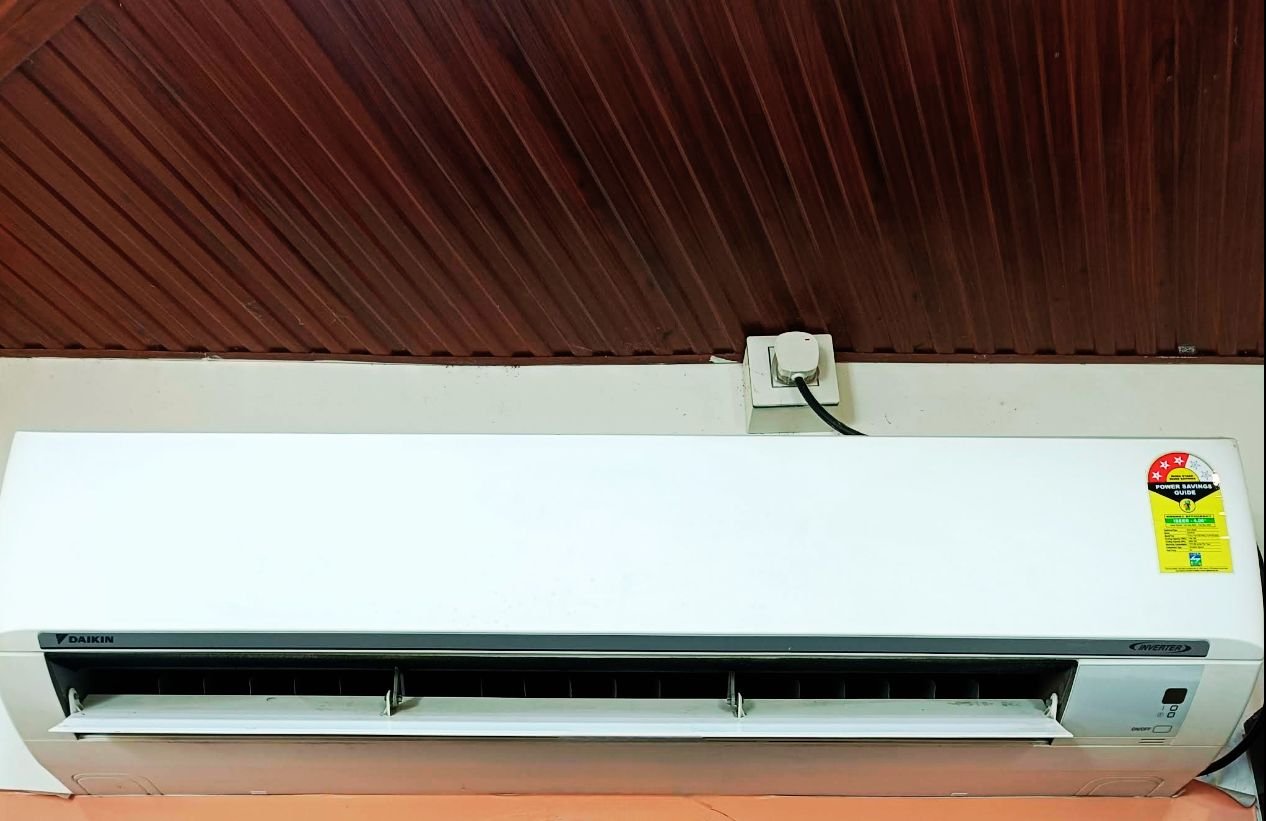
The 3D Airflow system operates the flap and the louvre together to circulate air at all corners of the room evenly so that the room is evenly cooled. Power Chill Operation cools the room quickly when quick relief is required. The unit can operate at ambient temperatures as high as 54 °C, it includes an inbuilt stabiliser to regulate the voltage and the anti-corrosive DNNS coating on the heat exchanger of the indoor unit is self-healing and prevents chipping and environmental damage. Triple Display feature displays real-time estimated percentage of power consumption, set or room temperature, and error codes on the unit.
So…Which is Better? LG or Daikin?
Is there one that is definitively better than the other between LG and Daikin? Basically, no. Each of the two brands has its unique collection of features and advantages, as well as disadvantages.
LG or Daikin might be able to offer you the best option depending on what exactly you are looking.
1. Which kind of air conditioner are you in need of?
- 1 Ton Split AC – These are the models that suit small rooms (maximum of 110 sq.ft). They use less power, are cheaper to purchase and are usually quieter to run. With that said, they will not be sufficient in bigger spaces and will not work well in very hot climates unless the room is well insulated.
- 1.5 Ton Split AC -1.5 ton ACs are the most commonly used in medium-sized rooms (111 to 150 sq.ft). They provide a good balance between cooling energy and power. Similarly, they are also a little more costly to operate, however, they can manage Indian summers with a lot of ease compared to a 1 ton unit.
2. What is your budget?
Each brand appears to have strong points, depending on the specific type and the power you need, as far as money is concerned.
- In the case of 1.5 Ton 5 Star ACs, the Daikin ATKM50UV16VA will cost approximately 42,490 whereas the LG US-Q19YNZE3 will cost a little less at approximately 41,290. They both occupy the same ₹₹ tier, but LG will provide you with a slight price discount and several other smart features such as VIRAAT Mode and AI Convertible 6-in-1 cooling.
- In the case of 1.5 Ton 3 Star ACs, the Daikin ATKL50UV16VAF is available at approximately 35,000, and the LG AS-Q18JNXE costs a little more at approximately 35,990. The two are at the top of the ₹₹ tier, which makes them available as mid-range options. Daikin is slightly ahead of price here, and LG is loading more smart features into the small premium.
- The Daikin FTKM35U (5 Star) costs approximately 35,700 and the LG AS-Q13JNYE (4 Star) is lower at approximately 34,490 in the case of 1 Ton ACs. Daikin has a star rating and the same ISEER at this capacity whereas LG has features such as 4-way swing and VIRAAT Mode at lower price.
In general, when you are searching the cheapest initial price, LG will be more likely to provide price aggressions in general. Daikin usually has the advantage in case you are ready to pay a little more on energy ratings and long-term energy savings.
3. What do you consider to be important?
- You would like to have the highest possible energy efficiency and the minimal electricity bills? You will be interested in Daikin ATKM50UV16VA (1.5 ton, 5 star, ISEER 5.2) or LG US-Q19YNZE3 (1.5 ton, 5 star, ISEER 5.20). Both are of the best efficiency with rated annual energy consumption of approximately 786 kWh of Daikin and 745 kWh of LG.
- Need the most intelligent features and AI-powered cooling? Do not overlook LG US-Q19YNZE3 or the LG AS-Q18JNXE. The AI Convertible 6-in-1 technology of LG automatically changes the capacity, temperature, and fan speed depending on the conditions in the room. The VIRAAT Mode reaches cooling capacity to 116-124 which Daikin does not have in the same manner.
- You desire the very best air purification and hygiene features? The Daikin models cannot be defeated here. The Patented Streamer Discharge technology of Daikin breaks down viruses, bacteria and harmful gases. Moreover, the Dew Clean Technology is a self-cleaning heat exchanger, which is cleaned automatically with a press of a button, and the indoor unit is hygienic. LG also has HD Filters with Anti-Virus Protection and Auto Clean that are also good options but the streamer technology of Daikin does a step further.
- You desire whisper-quiet action, particularly in bedrooms? You should not overlook the Daikin FTKM35U (1 Ton, 5 Star) that reaches down to 27 dBA in its quiet mode. LG AS-Q13JNYE (1 Ton, 4 Star) reaches even lower with 21-22 dBA with the lowest setting, which makes it one of the quietest models on the market.
- You live in a place with a lot of heat? The range of LG works to 55 °C ambient temperature on most of its models whereas Daikon works between 52 °C and 56 °C depending on the model. Both brands deal with the extreme Indian summers, however, the Daikin ATKM50UV16VA (5 Star) with 56oC high ambient operation puts it slightly ahead in the most extreme situations.
- You require an inbuilt stabilizer and voltage fluctuation protection? Both brands have you covered. Daikin Stabilizer Inside operates between 130 V and 285 V, and LG operates between 120 V and 290 V without a stabilizer. LG has a more generous voltage range, which may be useful in places with extreme power variations.
- You would like the most dehumidification during monsoon season? The Monsoon Comfort Technology of LG purports to save up to 30.8% of the energy used when the dehumidifier is in conventional mode as opposed to when it is in dehumidification mode. It has a sub-divided temperature control matrix of 7 temperature and humidity control levels. Daikin has a typical Dry Function of automatic dehumidification, which is effective, but LG has a more sophisticated monsoon mode.
- You are interested in the most durable outdoor unit? Daikin has provided DNNS Self Heal coating, enhanced anti-corrosion treatment, and inner grooved copper pipes in its product range. LG competes with Ocean Black Protection and Gold Fin+ coating on indoor and outdoor units. They are both very effective in corrosion prevention, but the self-healing coating technology of Daikin is a special feature.
A different model can be either right or wrong depending on what exactly you are looking. We hope that the above comparisons will enable you to reduce your options and subdivide these two mega-brands into manageable portions.
And yet you cannot decide which one is the best one to choose, then leave us a comment below with your question. We also strive to answer any questions in 24 hours.
Frequently Asked Questions
Daikin split air conditioners have been characterised by their silence, high quality air purification and energy efficiency. Their product range consists of 3 Star and 5 Star models all loaded with their own technologies such as Streamer Discharge and Dew Clean.
The Daikin ATKM50UV16VA (1.5 Ton, 5 Star) is the best Daikin overall, in our evaluation. It provides an ISEER of 5.2, Coanda Airflow to achieve even cooling, Patented Swing Compressor to operate quietly, and high ambient operation to 56 °C. A powerful budget solution, however, is the 3 Star ATKL50UV16VAF. It has most of the same fundamental features, such as Streamer Discharge and Stabiliser Inside, but at a much lower price range. Both models are good options, but it depends on what you want in an air conditioner.
The LG US-Q19YNZE3 (1.5 Ton, 5 Star) is the flagship of the current split AC product range of LG. It encompasses all the signature features that the brand is renowned by and makes a very well-rounded package. The 5 Star and the 3 Star versions have both been found to be great alternatives.
They both were easy to use in extreme heat, humidity and different room sizes. Moreover, the AI Convertible 6-in-1 technology is a smart air conditioner because it automatically regulates the cooling capacity according to the real-time situation in the room.
The LG AS-Q13JNYE (1 Ton, 4 Star) would be a great option in a small room of up to 110 sq.ft. Similar to other models of the LG brand, it has AI Convertible 6-in-1 cooling, and VIRAAT Mode to provide additional cooling as needed. In addition, it is very affordable.
This is a flexible split AC with various capacity settings, ranging between 40 percent and 124 percent through VIRAAT Mode, to suit various room conditions and occupancy. It also has 4-way air swing, HD filter with Anti-Virus Protection, Ocean Black Protection on copper tubes, stabiliser-free operation between 120 V to 290 V and a noise level of as low as 21 dBA on the quietest level.
Both Daikin and LG provide the same warranty models in their split AC models. Both brands offer 1 year warranty on the product, 5 years warranty on PCB and 10 years warranty on the compressor.
The 5-year PCB warranty offered by Daikin and the overall warranty offered by LG are both good long-term guarantees. Service network LG tends to have a broader service network in smaller towns and cities in India, whereas the service network of Daikon is robust in metropolitan areas and growing gradually. Both brands will offer reliable after sales services on the life of your air conditioner.